SPY Museum Berlin

SPY Museum Berlin

Brand ID / ICONIC Consulting GmbH / 2015

Located on the former border strip where the Berlin Wall once divided the city, Spy Museum Berlin offers visitors an immersive journey into the hidden world of espionage, intelligence agencies, covert operations, and surveillance technologies. Through interactive exhibits, multimedia installations, and hands-on experiences, the museum reveals how information is gathered, encrypted, concealed, and decoded, inviting visitors to think like spies while exploring the political and cultural history of intelligence work.


We were commissioned to develop a comprehensive visual identity system that would translate these themes into a distinctive and contemporary brand experience. The challenge was to create a visual language that moved beyond the clichés typically associated with espionage and instead reflected the museum’s modern, technology-driven perspective on intelligence gathering and information processing.

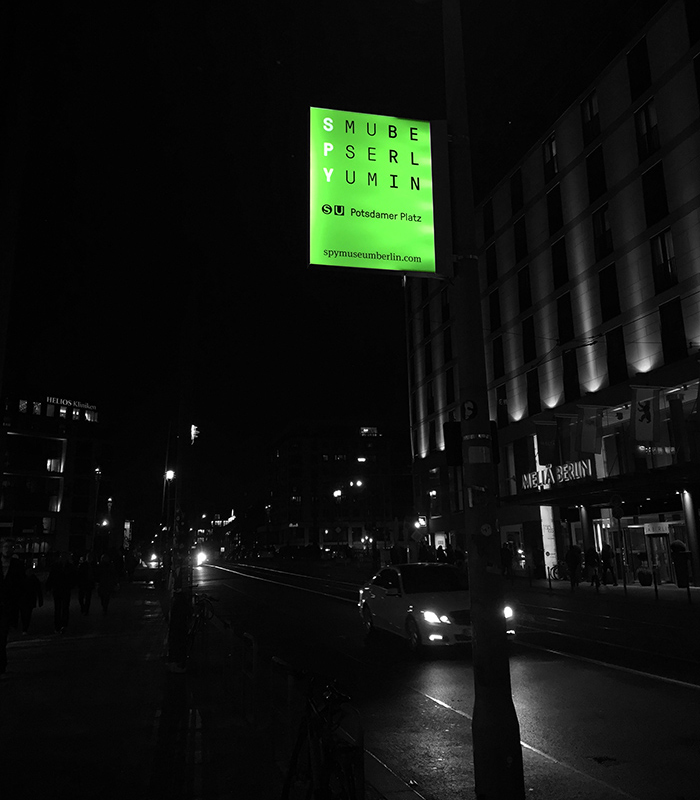
At the heart of the identity is a concept inspired by digital coding and decoding. The logo system consists of two independent elements: a typographic wordmark and a modular symbol built from a grid of geometric squares. The symbol references encrypted digital information, while the wordmark represents its decoded counterpart. This relationship became the foundation for the entire visual language, influencing layouts, image treatments, graphic patterns, and communication materials across all touchpoints.

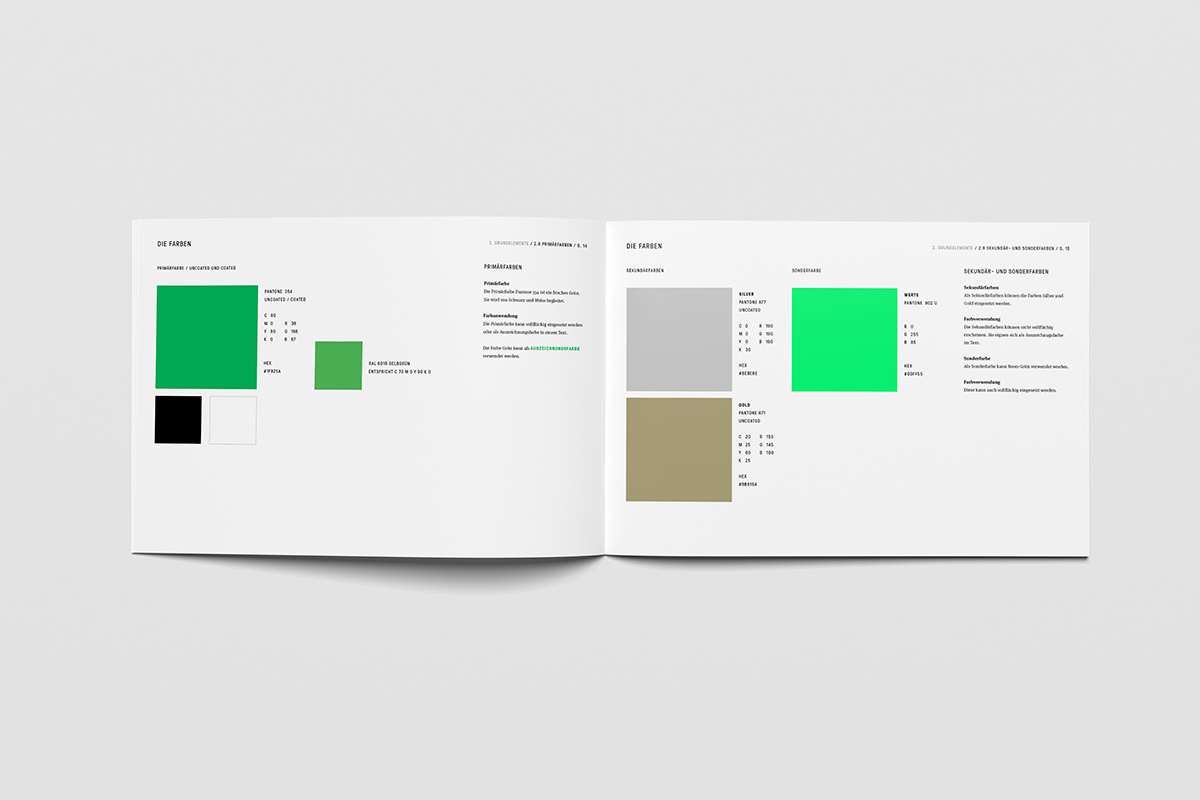
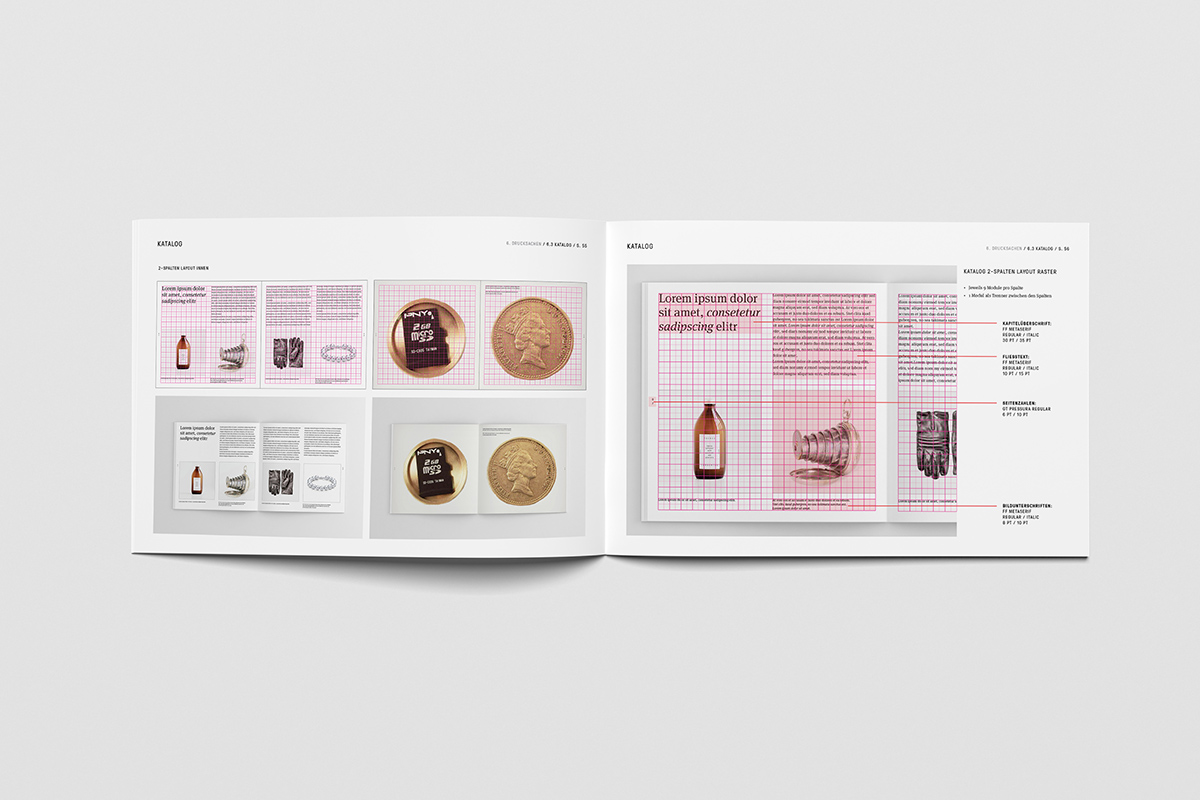
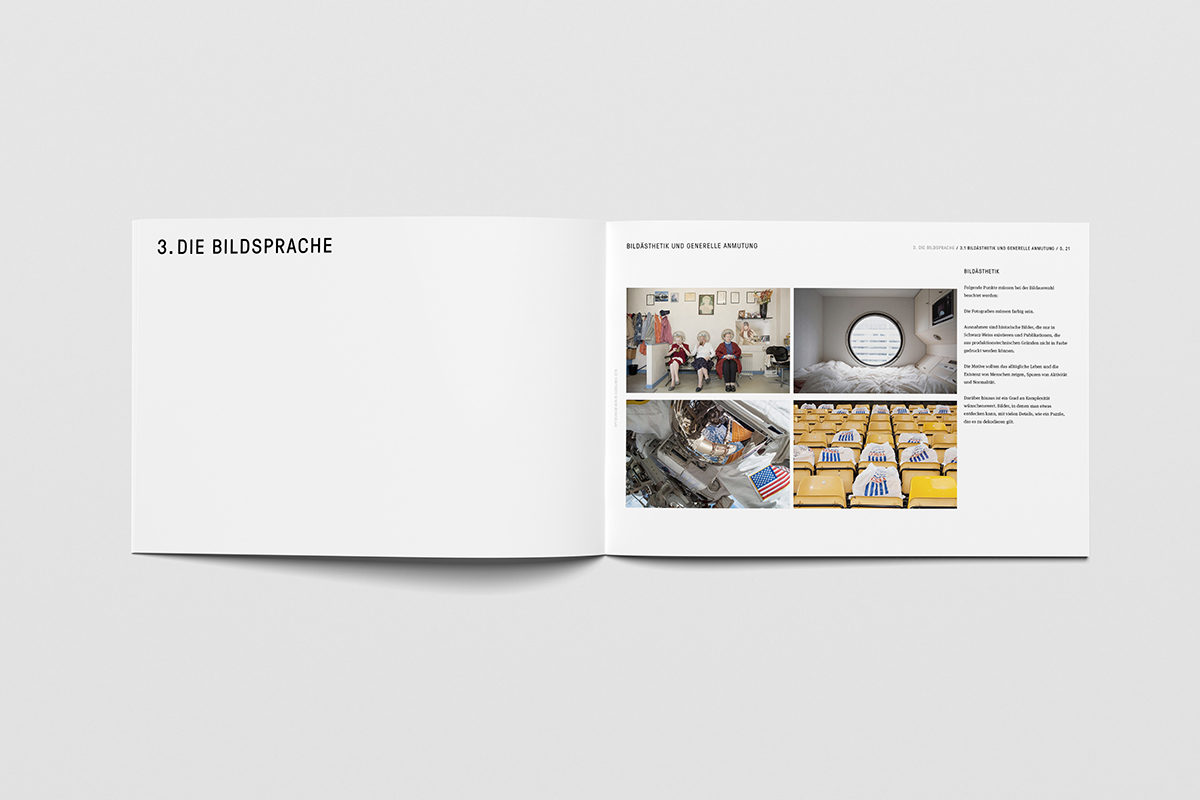
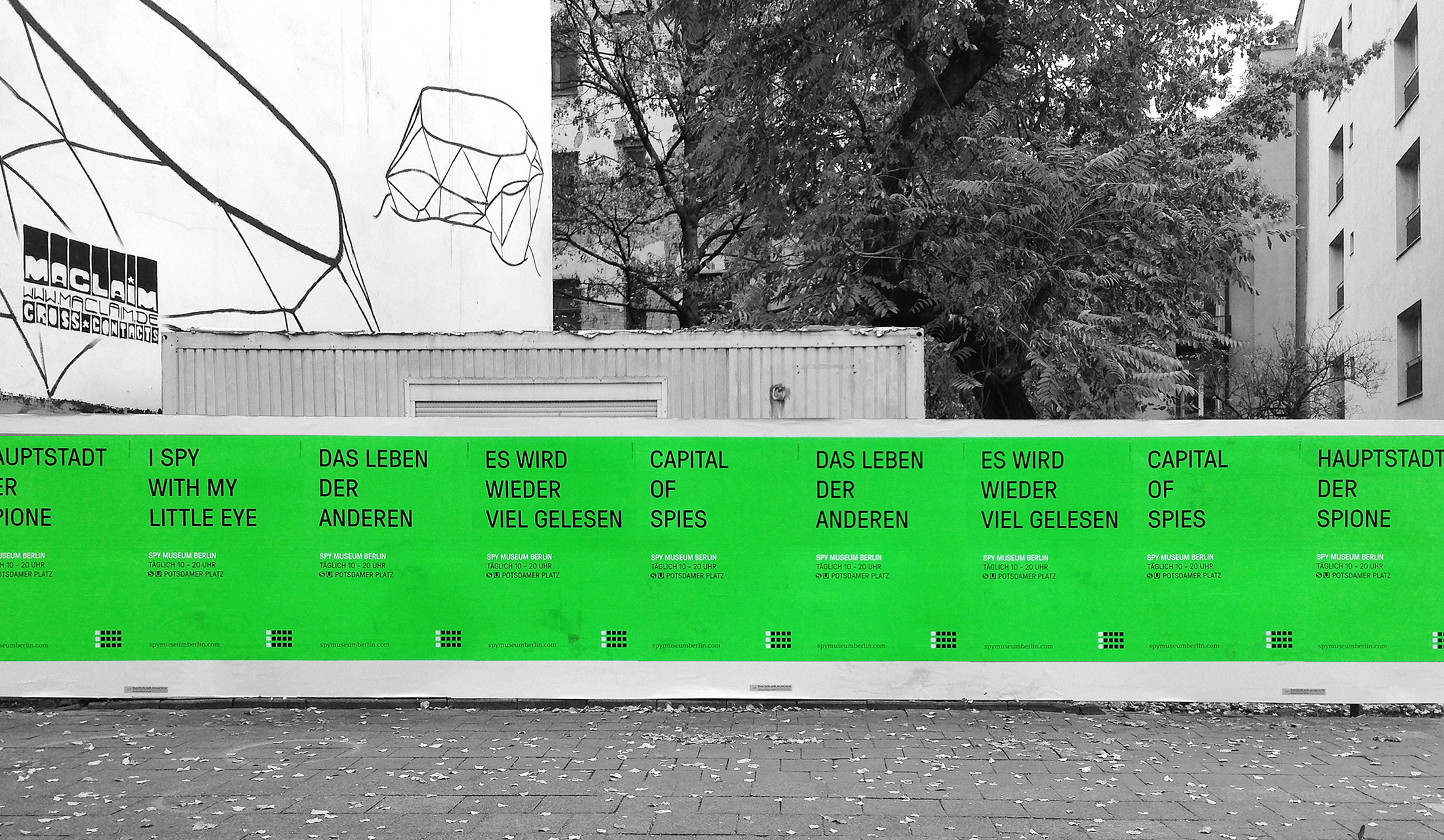
The visual system was supported by a carefully defined set of brand elements, including a custom colour palette built around a vibrant signal green combined with black and white, a typography system that balances technical precision with editorial readability, and a flexible grid structure derived from the logo itself. Photography guidelines encouraged the use of complex, detail-rich imagery that rewards close observation, echoing the investigative nature of espionage. Additional graphic interventions based on the modular square grid allowed images to be fragmented, concealed, and reconstructed, reinforcing the concepts of secrecy, surveillance, and decoding.

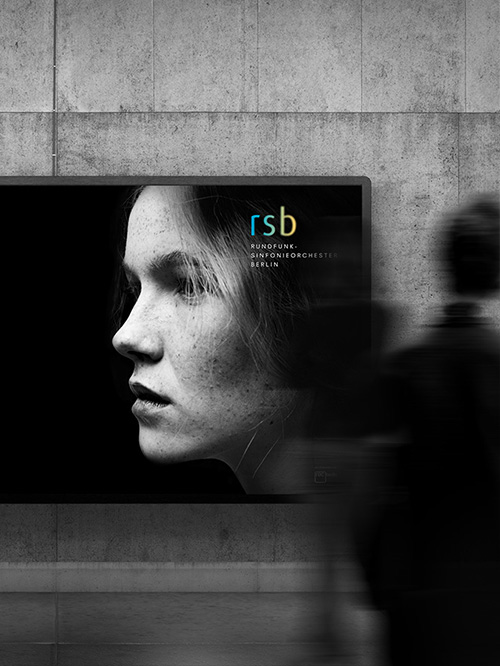
The project included the design of the museum logo, stationery system, advertising templates, signage and wayfinding, exhibition graphics, printed publications, website design, social media applications, and a broad range of marketing materials. To ensure consistency across all physical and digital touchpoints, we also developed a comprehensive set of brand guidelines covering logo usage, typography, colour application, imagery, editorial layouts, exhibition elements, outdoor advertising, digital communication, and visitor-facing experiences.

The resulting identity provides Spy Museum Berlin with a coherent and highly recognisable visual presence that reflects both the historical context of espionage and its contemporary technological dimensions, creating a brand experience that is as intriguing and layered as the stories told within the museum itself.


Located on the former border strip where the Berlin Wall once divided the city, Spy Museum Berlin offers visitors an immersive journey into the hidden world of espionage, intelligence agencies, covert operations, and surveillance technologies. Through interactive exhibits, multimedia installations, and hands-on experiences, the museum reveals how information is gathered, encrypted, concealed, and decoded, inviting visitors to think like spies while exploring the political and cultural history of intelligence work.

We were commissioned to develop a comprehensive visual identity system that would translate these themes into a distinctive and contemporary brand experience. The challenge was to create a visual language that moved beyond the clichés typically associated with espionage and instead reflected the museum’s modern, technology-driven perspective on intelligence gathering and information processing.

At the heart of the identity is a concept inspired by digital coding and decoding. The logo system consists of two independent elements: a typographic wordmark and a modular symbol built from a grid of geometric squares. The symbol references encrypted digital information, while the wordmark represents its decoded counterpart. This relationship became the foundation for the entire visual language, influencing layouts, image treatments, graphic patterns, and communication materials across all touchpoints.

The visual system was supported by a carefully defined set of brand elements, including a custom colour palette built around a vibrant signal green combined with black and white, a typography system that balances technical precision with editorial readability, and a flexible grid structure derived from the logo itself. Photography guidelines encouraged the use of complex, detail-rich imagery that rewards close observation, echoing the investigative nature of espionage. Additional graphic interventions based on the modular square grid allowed images to be fragmented, concealed, and reconstructed, reinforcing the concepts of secrecy, surveillance, and decoding.

The project included the design of the museum logo, stationery system, advertising templates, signage and wayfinding, exhibition graphics, printed publications, website design, social media applications, and a broad range of marketing materials. To ensure consistency across all physical and digital touchpoints, we also developed a comprehensive set of brand guidelines covering logo usage, typography, colour application, imagery, editorial layouts, exhibition elements, outdoor advertising, digital communication, and visitor-facing experiences.

The resulting identity provides Spy Museum Berlin with a coherent and highly recognisable visual presence that reflects both the historical context of espionage and its contemporary technological dimensions, creating a brand experience that is as intriguing and layered as the stories told within the museum itself.
Design guidelines 

Scroll up Drag View